


Can I Train My Dog Myself, or Do I Need a Professional Dog Trainer?


Here's something you might not expect to hear from a professional dog trainer.
You can absolutely train your own dog. In fact, I believe you should.
After more than 20 years of working with dogs in Toronto (and all over North America), I've learned that the most important person in your dog's life isn't the trainer.
It's you.
You're the one your dog lives with, walks with, plays with, and looks to for guidance every day.
But there's a difference between teaching your dog a few commands and understanding why your dog behaves the way they do.
And sometimes, getting professional help can save you months of frustration.
So how do you know when you can handle dog training yourself and when it's time to call a professional?
Let's explore.
When Can You Train Your Dog Yourself?
Many basic training skills can be taught at home with patience, consistency, and a little understanding of how dogs learn.
For example:
Teaching your puppy to sit or lie down.
Establishing a consistent bathroom routine.
Practising recall in a safe, enclosed environment.
Rewarding calm behaviour around the house.
Teaching your dog to wait politely at doors.
Building positive associations with grooming and handling.
These are excellent opportunities to develop communication and trust.
You don't necessarily need a professional trainer for every little challenge.
In fact, I encourage dog owners to become active participants in their dog's education.
The goal isn't to create a dog who only listens to a trainer. It's to develop a dog who understands and trusts you.
Why Does Training Your Own Dog Sometimes Stop Working?
Have you ever noticed that your dog listens perfectly in the kitchen but completely ignores you outside?
Maybe your dog sits beautifully when you're holding a treat.
But the moment another dog appears, it's as though you don't exist.
This is one of the most common frustrations I hear from dog owners in Toronto.
And it usually isn't because your dog is stubborn.
Dogs learn in context.
A quiet living room is very different from a busy sidewalk filled with people, bicycles, traffic, squirrels, and other dogs.
Your dog might understand what you're asking but be too distracted, frightened, or excited to respond.
That's where understanding emotional regulation becomes important.
Sometimes the problem isn't that your dog doesn't know what to do. It's that your dog isn't emotionally ready to do it.
Five Signs You Might Need a Professional Dog Trainer
1. Your Dog Is Reactive on Walks
Does your dog bark, lunge, growl, or become extremely excited when another dog approaches?
Leash reactivity can have several causes, including fear, frustration, excitement, or previous experiences.
Simply telling your dog to sit may not address what's happening emotionally.
A professional can help you identify triggers, understand body language, and develop safer, more effective responses.
2. Your Dog Shows Aggressive Behaviour
Growling, snapping, biting, and resource guarding deserve careful attention.
Aggression is not always about dominance.
Sometimes it's fear.
Sometimes it's pain.
Sometimes it's a dog attempting to protect something valuable or create distance from a perceived threat.
Before trying to correct aggressive behaviour, it's important to understand why it's happening.
If your dog has bitten someone, threatens serious injury, or displays escalating aggression, seek qualified professional help. A veterinarian should also assess possible medical causes.
3. Your Dog Can't Settle Down
Some dogs seem to be constantly moving.
Jumping.
Barking.
Pacing.
Demanding attention.
Reacting to every sound.
Owners often assume these dogs need more exercise.
And sometimes they do.
But I've also worked with dogs who were getting plenty of physical activity and still couldn't relax.
They needed help learning how to settle, feel secure, and respond calmly to their environment.
4. You've Tried Everything and Nothing Works
You've watched the videos.
Bought the treats.
Practised the commands.
Maybe you've even tried several different training philosophies.
But the same problems keep returning.
This is often a sign that you're working on the outward behaviour without fully understanding what drives it.
A fresh set of experienced eyes can help you see something you've been missing.
5. Your Dog's Behaviour Is Affecting Your Life
Perhaps you've stopped inviting friends over.
Maybe walking your dog has become stressful.
Or you're constantly worried about how your dog will react in public.
When behaviour problems begin limiting your freedom or your dog's quality of life, professional guidance can be a worthwhile investment.
Why More Commands Aren't Always the Answer
Here's where my approach to dog training is a little different.
I've studied many of the major training methods, including positive reinforcement, clicker training, balanced training, and behaviour rehabilitation.
Each has taught me something.
But one of the most important lessons I've learned came from simply observing dogs.
Dogs communicate constantly.
Through posture.
Movement.
Eye contact.
Distance.
Tension.
Breathing.
And subtle calming signals.
Much of this communication happens before barking, lunging, or other obvious behaviours appear.
When you learn to recognize these signals, you can respond earlier and more effectively.
Imagine noticing that your dog is becoming uncomfortable before they start barking at another dog.
Instead of waiting for the explosion, you calmly create distance, help your dog feel safer, and practise a more appropriate response.
That's not simply obedience.
That's communication.
And it's one of the foundations of my Peaceful Alpha approach.
The Biggest Mistake People Make When Training Their Own Dogs
One of the biggest mistakes is trying to change behaviour without considering the dog's emotional state.
Imagine you're terrified of spiders.
Someone tells you to sit quietly while a giant spider crawls toward you.
You might understand the instruction perfectly.
But that doesn't mean you feel capable of following it.
Dogs can experience something similar.
A frightened dog may struggle to respond to familiar cues.
An overstimulated dog may have difficulty focusing.
A frustrated dog may react impulsively.
The solution isn't always to become louder, stricter, or more demanding.
Sometimes the first step is helping the dog feel safe enough to learn.
What Does a Professional Dog Trainer Actually Do?
A good trainer does much more than teach commands.
They observe.
They assess.
They identify patterns.
They help you understand what may be contributing to your dog's behaviour.
And they teach you practical ways to create change.
When I work with families through private in-home dog training in Toronto, I pay attention to the entire picture.
Your dog's history.
Your household routines.
Your body language.
Your dog's emotional responses.
The environment where the behaviour occurs.
And how everyone in the household communicates with the dog.
Because what happens at home matters just as much as what happens during a training session.
Why I Prefer Teaching Dogs and Their Owners Together
Imagine sending your dog away for training.
Two weeks later, your dog returns and performs beautifully for the professional trainer.
But what happens when you're holding the leash?
Does your dog respond the same way?
Do you understand how to maintain the training?
Do you know what to do when the old behaviour returns?
Dogs don't automatically transfer everything they've learned with one person to another.
That's why I believe owner involvement is so valuable.
During private in-home training, you learn alongside your dog.
You develop the skills.
You practise the communication.
You begin recognizing the signals.
And you learn how to respond when things don't go according to plan.
I'm not just training your dog. I'm helping you become the person your dog can confidently follow.
How Much Does Private Dog Training Cost in Toronto?
Professional training prices vary depending on the trainer, services, and behavioural challenges involved.
At Peaceful Alpha, I offer a personalized in-home training program.
Initial Consultation — $250
We begin by assessing your dog's behaviour, discussing your goals, and identifying practical steps forward.
Complete Private Training Program — $2,000
The program includes:
Eight private, one-hour sessions.
Personalized training in your home and everyday environment.
Hands-on coaching for you and your family.
Practical support for behavioural challenges.
One full year of follow-up support by phone, text, and video.
My goal is to give you the understanding and skills to continue making progress long after our sessions are finished.
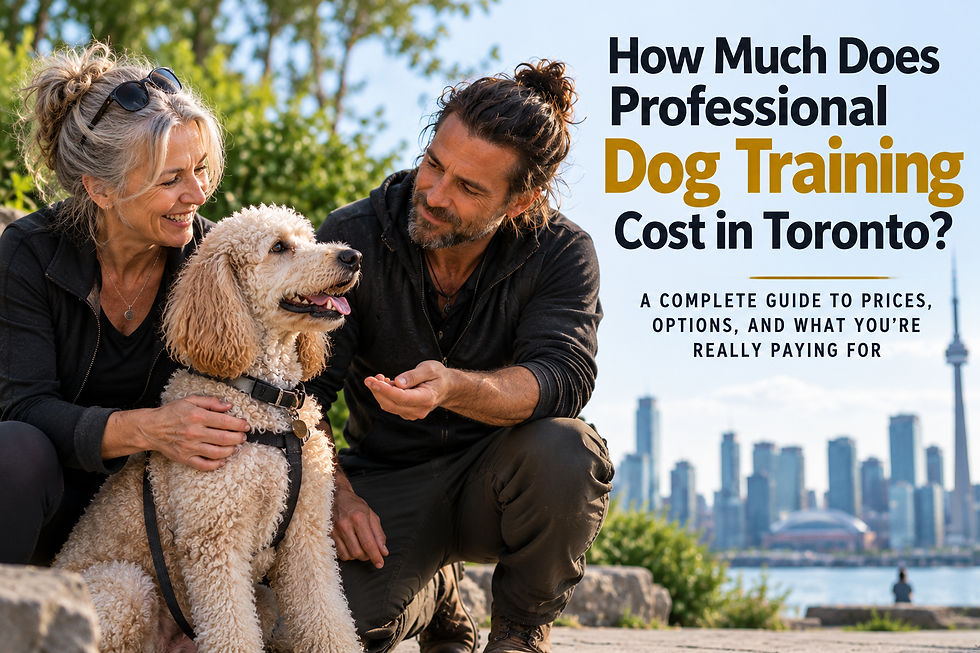
For a detailed breakdown of pricing, read How Much Does Professional Dog Training Cost in Toronto?.
So, Should You Train Your Dog Yourself or Hire a Professional?
Here's my advice.
If you're teaching basic skills and making steady progress, keep going.
Enjoy the process.
Learn together.
Celebrate the small improvements.
But if you're dealing with aggression, reactivity, serious anxiety, persistent behavioural problems, or growing frustration, consider getting professional guidance.
Not because you're incapable of training your own dog.
But because understanding what your dog needs can be much easier with experienced support.
The best professional dog trainer doesn't replace you. They help you become a better trainer for your own dog.
Looking for a Private Dog Trainer in Toronto?
I'm Jesse Sternberg, founder of Peaceful Alpha and author of Enlightened Dog Training.
For more than 20 years, I've worked with dogs and their owners, helping them develop better communication, confidence, and understanding.
My approach goes beyond simply teaching commands.
I help families recognize the emotional and environmental factors influencing their dog's behaviour and develop practical ways to create positive change.
Whether you're dealing with a reactive dog, a fearful rescue, an overstimulated puppy, or a dog who simply won't listen, I'd love to help you understand what's going on.
You don't need to become a professional dog trainer. You just need to learn how to communicate with the dog in front of you.
Contact me to discuss your dog and find out whether my private training program is right for you.
Frequently Asked Questions
Can I train my dog without a professional?
Yes. Many dogs can learn basic obedience, household manners, and everyday skills through consistent owner-led training. Professional guidance becomes especially valuable when behavioural challenges are complex, persistent, or potentially dangerous.
How do I know if my dog needs professional training?
Consider professional help if your dog displays aggression, serious reactivity, separation-related distress, resource guarding, or behaviours that significantly affect daily life.
Is private dog training better than group classes?
Private training offers personalized attention and allows you to work on challenges in your dog's everyday environment. Group classes can be excellent for basic skills and appropriate social learning.
Can a professional trainer help a dog that won't listen?
Yes. A trainer can assess whether the issue involves unclear communication, inconsistent practice, distractions, fear, excitement, or other factors, then develop an appropriate training plan.
Is it worth hiring a dog trainer for a puppy?
It can be. Early guidance can help owners establish healthy routines, teach essential skills, and prevent common problems from becoming more difficult to manage.
Can older dogs still learn new behaviours?
Absolutely. Dogs can continue learning throughout their lives. Training should be adapted to their physical health, previous experiences, and individual needs.

Comments